
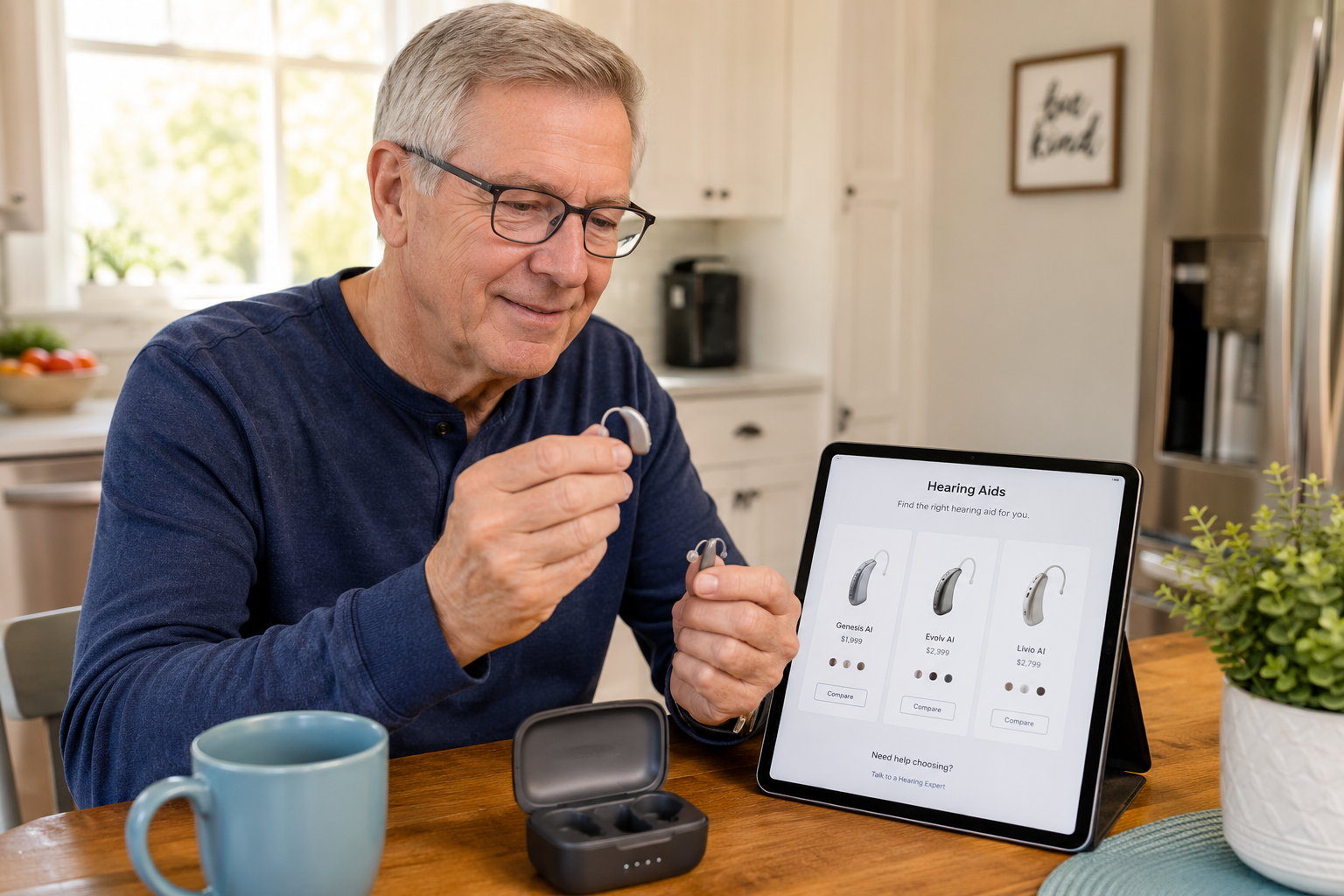

Best Hearing Aids for Seniors in 2026 – Affordable Options That Actually Work
Hearing loss affects more Americans than most people realize. According to the National Institute on Deafness and Other Communication Disorders, approximately 1 in 3 people between the ages of 65 and 74 has hearing loss, and nearly half of people over 75 have difficulty hearing. Yet the majority of Americans who could benefit from hearing aids do not have them — primarily because of cost.
This guide cuts through the noise. We compare the best hearing aids available for seniors in 2026 — including both over-the-counter options under $500 and prescription devices — so you can make an informed decision without spending thousands of dollars unnecessarily.
We also explain what Medicare covers, what it does not, and how to get help paying for hearing aids if cost is a barrier.
Disclosure: This article contains affiliate links. If you purchase through our links we may earn a small commission at no extra cost to you. We only recommend products we believe are genuinely useful.
The Big Change — OTC Hearing Aids Are Now Available Without a Prescription
In 2022 the FDA finalized rules allowing over-the-counter hearing aids to be sold directly to consumers without a doctor’s prescription, audiologist fitting, or medical exam. This was a landmark change that dramatically reduced costs for millions of Americans with mild to moderate hearing loss.
OTC hearing aids are now sold at pharmacies, big box retailers, and online — and they work well for many seniors with mild to moderate hearing loss. Prescription hearing aids remain the better choice for severe hearing loss or complex audiological needs.
Before buying any hearing aid you should have a hearing test — either through your doctor, an audiologist, or a free online screening at hearingtest.online. Knowing your specific type and degree of hearing loss helps you choose the right product.
What to Look for in a Hearing Aid for Seniors
Before comparing products here are the key features that matter most for seniors:
Ease of use — Controls should be simple and accessible, especially for people with limited dexterity or vision
Rechargeable vs. battery — Rechargeable models eliminate the frustration of changing tiny batteries regularly
Bluetooth connectivity — Connects to phones, televisions, and tablets for direct audio streaming
Background noise reduction — Essential for understanding speech in restaurants, family gatherings, or crowded environments
Size and comfort — Behind-the-ear (BTE) models are easier to handle; receiver-in-canal (RIC) models are more discreet
Trial period and warranty — Look for at least 45-day return policy and one-year warranty minimum
Best OTC Hearing Aids for Seniors in 2026
1. Jabra Enhance Plus — Best Overall OTC Pick
Price: Approximately $799 per pair Type: In-ear (earbuds style) Prescription required: No
The Jabra Enhance Plus consistently earns top ratings from audiologists and consumer reviewers alike. It provides exceptional sound quality for mild to moderate hearing loss and doubles as wireless earbuds for music and phone calls.
Pros:
- Superior sound quality among OTC options
- Rechargeable with long battery life
- Bluetooth streaming to iPhone and Android
- App-controlled with easy adjustments
- 100-day trial period — one of the best in the industry
Cons:
- Higher price point for an OTC device
- In-ear design can be uncomfortable for some seniors
Best for: Tech-comfortable seniors who want premium OTC performance and Bluetooth integration.
2. Sony CRE-10 — Best Discreet OTC Option
Price: Approximately $999 per pair Type: In-canal (nearly invisible) Prescription required: No
Sony entered the hearing aid market with a strong product. The CRE-10 is self-fitting — meaning it calibrates itself to your hearing through an app-based test — and is genuinely close to invisible when worn.
Pros:
- Nearly invisible in-canal design
- Self-fitting technology through smartphone app
- Rechargeable with charging case
- Strong background noise reduction
- Available at major retailers including Costco and CVS
Cons:
- App required for setup — may challenge less tech-savvy users
- Not ideal for severe hearing loss
Best for: Seniors who prioritize discretion and are comfortable with smartphone apps.
3. Eargo 7 — Best Completely Invisible Option
Price: Approximately $1,650 per pair Type: Completely-in-canal Prescription required: No
Eargo has built a strong reputation for invisible hearing aids designed for people with mild to moderately severe high-frequency hearing loss — the most common type of age-related hearing loss.
Pros:
- Completely invisible — sits entirely inside the ear canal
- Rechargeable with portable case
- Excellent customer support and professional setup guidance
- FSA and HSA eligible
- Sound Adjust+ technology that adapts to different environments automatically
Cons:
- Higher price than most OTC options
- Not suitable for all hearing loss profiles
- Small size can be challenging for people with dexterity limitations
Best for: Seniors who are self-conscious about visible hearing aids and have high-frequency hearing loss.
Visit Eargo.com for their current promotional offers — they frequently run significant discounts.
4. Lexie B2 Powered by Bose — Best Budget-Friendly OTC
Price: Approximately $849 per pair Type: Behind-the-ear (receiver-in-canal) Prescription required: No
Bose’s entry into the hearing aid market produced a genuinely solid product at a competitive price. The Lexie B2 offers strong sound quality with straightforward app-based controls.
Pros:
- Bose sound processing technology
- Simple app-based self-fitting
- Good background noise reduction
- 45-day trial period
- Available at Best Buy, Walmart, and online
Cons:
- Behind-the-ear design is more visible than in-canal options
- Battery life shorter than some competitors
Best for: Seniors who trust the Bose brand and want reliable OTC performance at a reasonable price.
5. MDHearing VOLT+ — Best Value Under $500
Price: Approximately $399 per pair Type: Behind-the-ear Prescription required: No
For seniors on a fixed disability income who need an affordable entry-level hearing aid, the MDHearing VOLT+ provides solid basic amplification at a fraction of the cost of premium devices.
Pros:
- Most affordable rechargeable option on this list
- Designed for seniors — simple controls, no app required
- Good amplification for mild to moderate loss
- 45-day risk-free trial
- US-based customer support
Cons:
- Less sophisticated noise reduction than premium options
- No Bluetooth connectivity
- Not suitable for complex hearing profiles
Best for: Seniors on tight budgets who need basic hearing amplification without technology complexity.
Check current price on MDHearing.com
OTC vs Prescription Hearing Aids — Which is Right for You?
| Factor | OTC Hearing Aids | Prescription Hearing Aids |
|---|---|---|
| Cost | $400 – $1,800 per pair | $2,000 – $7,000+ per pair |
| Prescription needed | No | Yes |
| Best for | Mild to moderate loss | Moderate to severe loss |
| Fitting | Self-fitting via app | Professional audiologist fitting |
| Customization | Limited | Highly customized |
| Follow-up support | Limited | Ongoing audiologist care |
| Medicare coverage | Generally no | Generally no — see below |
Does Medicare Cover Hearing Aids?
This is one of the most common questions seniors ask — and the answer requires careful explanation.
Original Medicare (Part A and Part B) does NOT cover hearing aids or routine hearing exams. This has been a consistent gap in Medicare coverage for decades.
However there are some exceptions and workarounds worth knowing:
Medicare Advantage (Part C) — Many Medicare Advantage plans include hearing benefits that Original Medicare does not. Medicare Advantage plans generally include various additional benefits not covered by Original Medicare such as routine dental and vision. Hearing aid coverage varies by plan — some cover up to $2,000 toward hearing aids per year. Check your specific plan’s Summary of Benefits.
Medicaid — If you qualify for Medicaid, your state’s program may cover hearing aids. Coverage varies significantly by state. Contact your state Medicaid office to ask specifically about hearing aid coverage.
Veterans Benefits — If you are a veteran, the VA provides hearing aids at no cost for veterans with service-connected hearing loss or certain other qualifying conditions. This is one of the most comprehensive hearing benefits available to any group of Americans. Contact your VA audiologist or read our guide on How VA Disability Ratings Work to understand if your hearing loss may be service-connected.
FSA and HSA accounts — Hearing aids are eligible expenses under Flexible Spending Accounts and Health Savings Accounts. If you or a family member has an FSA or HSA, these funds can be used to purchase hearing aids tax-free.
How to Get Help Paying for Hearing Aids
If cost remains a barrier after exploring Medicare Advantage and Medicaid, these programs provide financial assistance:
Starkey Hearing Foundation — starkeyhearingfoundation.org — Provides free hearing aids to those who cannot afford them.
Lions Clubs International — lionsclubs.org — Many local Lions Club chapters provide free or low-cost hearing aids through their Lions Affordable Hearing Aid Project.
State Vocational Rehabilitation Programs — If hearing loss affects your ability to work, your state’s vocational rehabilitation program may fund hearing aids. Find your state program at rsa.ed.gov.
Costco Hearing Centers — Costco offers prescription hearing aids at significantly below-market prices through their in-store hearing centers. Prices typically range from $1,400 to $2,000 per pair — roughly half the retail cost of comparable prescription devices. A Costco membership is required.
For seniors on a fixed disability income looking for ways to afford assistive devices and other disability-related expenses, read our guide on How to Budget on Disability Income in 2026.
Key Takeaways
- OTC hearing aids are now available without a prescription and cost $400 to $1,800 per pair
- The Jabra Enhance Plus and Sony CRE-10 are the top-rated OTC options for seniors in 2026
- For tight budgets the MDHearing VOLT+ provides solid performance under $500
- Original Medicare does not cover hearing aids — but Medicare Advantage plans often do
- Veterans may receive free hearing aids through the VA for service-connected hearing loss
- FSA and HSA funds can be used to purchase hearing aids tax-free
- Financial assistance is available through Starkey Hearing Foundation and Lions Clubs
Hearing loss does not have to mean isolation. With the right hearing aid at the right price, millions of American seniors are reconnecting with the people and sounds they love.
Frequently Asked Questions
Are OTC hearing aids as good as prescription hearing aids? For mild to moderate hearing loss OTC hearing aids from reputable brands like Jabra, Sony, and Bose perform comparably to many prescription devices at a fraction of the cost. For severe or profound hearing loss or complex audiological needs prescription devices fitted by an audiologist remain the better choice.
How long do hearing aids typically last? Most hearing aids last 3 to 7 years with proper care. Regular cleaning, keeping them dry, and storing them properly in a case significantly extends lifespan. Many brands offer extended warranty programs.
Can I try hearing aids before committing to purchase? Yes — most reputable OTC brands offer 45 to 100-day trial periods with full refunds. Always buy from a brand with a strong return policy so you can test the device in your real daily environment before committing.
What is the difference between a hearing aid and a hearing amplifier? Hearing amplifiers — also called personal sound amplification products or PSAPs — simply make all sounds louder. They are not FDA-regulated as medical devices and are not designed to treat hearing loss. Hearing aids are FDA-regulated medical devices that amplify specific frequencies based on your hearing profile. For anyone with diagnosed hearing loss a hearing aid is always the better choice.