
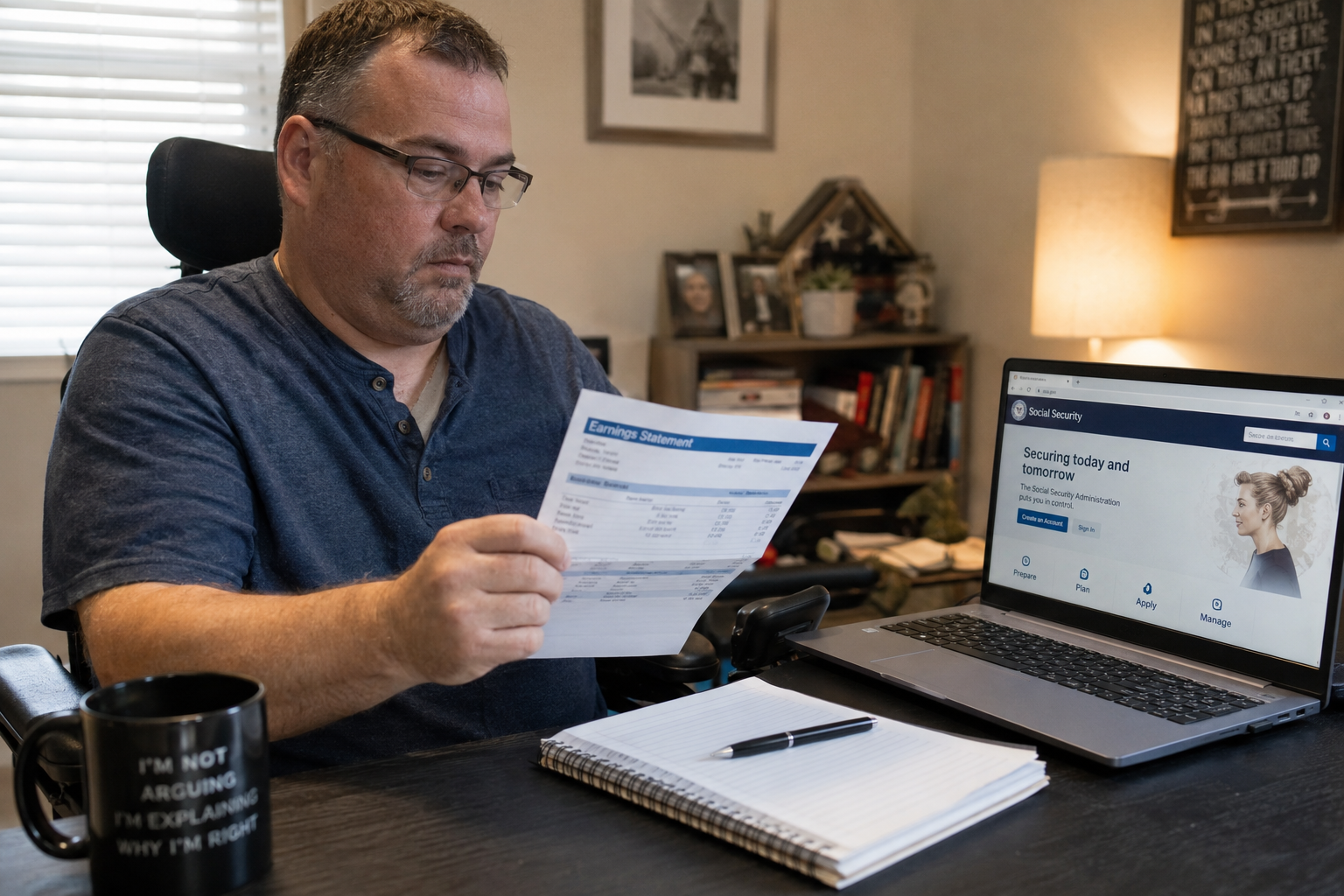

Can You Work While on SSDI? The 2026 Trial Work Period Explained
Maria worked as a nurse for nineteen years before a spinal condition forced her to stop. After two years on SSDI, her pain started improving. Her doctor cleared her for light part-time work. But Maria was terrified to take even one shift.
“What if I earn too much and lose everything?” she told her benefits counselor. “I can’t risk going back to zero.”
Maria’s fear is shared by hundreds of thousands of SSDI recipients across the country. And it is based on a misunderstanding. Because the Social Security Administration actually gives you a built-in safety net specifically designed for situations like hers.
It is called the Trial Work Period. Most people on SSDI have never heard of it — or they have heard of it but do not understand how it actually works. This guide changes that.
The Short Answer First
Yes. You can work while receiving SSDI without immediately losing your benefits.
The Trial Work Period allows you to test your ability to work for at least nine months. During those nine months, you receive your full SSDI payment regardless of how much you earn — as long as you report your work activity and continue to have a disability.
There is no income cap during the Trial Work Period. None. You could earn $4,000 in a month and still receive your full SSDI check — as long as that month counts as a Trial Work Period month and you have not exhausted your nine months yet.
That surprises most people. It surprised Maria too.
What Exactly Is the Trial Work Period?
The Trial Work Period is an SSDI program feature that allows you to test your ability to work for up to nine months without any impact on your disability benefits. It exists because the SSA recognizes that returning to work after a disabling condition is uncertain. You might try a job and find it is too much for your health. You might start strong and then experience a relapse.
Think of it as SSA’s “try before you commit” program. They are not forcing you to choose between working and your benefits. They are giving you breathing room to find out whether work is actually sustainable for you.
The 2026 Numbers You Need to Know
Before explaining the mechanics, here are the exact 2026 figures from SSA.gov:
| Term | 2026 Amount | What It Means |
|---|---|---|
| Trial Work Period threshold | $1,210/month | Earn above this = one TWP month used |
| SGA limit (non-blind) | $1,690/month | Earn above this after TWP = benefits may stop |
| SGA limit (blind) | $2,830/month | Higher limit for legally blind recipients |
| Self-employed TWP threshold | $1,210 net OR 80+ hours | Whichever comes first |
| Trial Work Period months | 9 months total | Within any rolling 60-month window |
| Extended Period of Eligibility | 36 months | Follows the Trial Work Period |
How the Trial Work Period Actually Works — Month by Month
In 2026, Social Security counts a calendar month toward your trial work period if you earn more than $1,210 before taxes. If you are self-employed, working more than 80 hours in a month counts as a trial work month even if you do not exceed the income threshold.
Here is what that looks like in real life.
Say you start a part-time retail job in January 2026 earning $1,400 per month. January counts as Trial Work Month 1. You still receive your full SSDI check.
In March you cut back to $900 because your health flares up. March does not count as a trial work month — you get your full check and use up none of your nine months.
In April you feel better and earn $1,500. That is Trial Work Month 2.
The nine months do not have to be consecutive. They accumulate within a rolling 60-month window. This is one of the most important and misunderstood aspects of the entire program.
What Happens After the Nine Months Are Used?
This is where people get nervous — and where they most often make mistakes.
After your trial work period, you have 36 months called the Extended Period of Eligibility. During this period, Social Security continues to monitor your work and earnings to see if you earn more than the SGA cap — and will pay SSDI for months when you do not exceed it.
Here is how the Extended Period of Eligibility works in practice:
| Your Monthly Earnings During EPE | What Happens to Your SSDI |
|---|---|
| Below $1,690 | You receive your full SSDI check |
| Above $1,690 | No check for that month |
| Drop back below $1,690 next month | Check automatically restarts |
| Consistently above $1,690 for entire EPE | Benefits end after EPE closes |
The critical point that most guides miss: your benefits can turn on and off month by month during the EPE. This is not an all-or-nothing situation. If you earn $1,800 in June and $1,400 in July, you get no check in June and your full check in July. No application required. It restarts automatically.
The Mistake That Costs People Thousands
Here it is plainly. The single most expensive mistake SSDI recipients make when returning to work is this — failing to report earnings to SSA.
Failing to report work is one of the most common reasons people end up with SSDI overpayments, which can be painful to pay back. Even if you are still within the Trial Work Period, you need to report your earnings so the SSA can track your work months correctly.
The SSA will eventually find out — through IRS records, employer reports, or routine reviews. When they do, they calculate exactly how much they overpaid you and demand it back. Sometimes this means they start taking money out of your monthly check, sometimes hundreds of dollars per month until the balance is cleared.
Report every month you work. Do it by calling 1-800-772-1213 or through your local Social Security office. Keep records of every report you make — the date, who you spoke to, and what you reported.
The Self-Employment Trap Most People Miss
Self-employed people have slightly different rules. For them, a trial work month is any month with more than $1,210 in net earnings or more than 80 hours of work — whichever comes first.
The 80-hour rule is the part that catches people off guard.
Say you start a small Etsy shop selling handmade items. In your first month you spend 90 hours working on it but only earn $600. Because you worked more than 80 hours, that month still counts as a Trial Work Period month — even though you did not hit the income threshold.
Track your hours carefully if you are self-employed. The SSA uses net earnings — income after business expenses — not gross income. Keep detailed business expense records.
What About Impairment-Related Work Expenses?
Few SSDI recipients know about this one. It can dramatically change your effective income calculation.
If you need to pay out of pocket for items or services specifically because of your disability in order to work — these costs can be deducted from your gross earnings before SSA applies the SGA limit.
Examples of qualifying Impairment-Related Work Expenses:
- Prescription medications specifically required to work
- Medical devices like a wheelchair, cane, or hearing aids used at work
- Attendant care services needed to get ready for work
- Transportation costs if disability prevents you from using public transit
- Counseling or therapy required to maintain employment
Practical example: You earn $1,850 per month but pay $250 monthly for a personal care attendant who helps you prepare for work each day. Your countable income for SGA purposes becomes $1,600 — below the $1,690 limit. Your SSDI check continues uninterrupted.
This deduction is not automatic. You must document it and request it from SSA. Contact your local Social Security office and ask specifically about Impairment-Related Work Expenses.
The Safety Net After the Safety Net — Expedited Reinstatement
What if you use up your Trial Work Period, exit the Extended Period of Eligibility, and then your health collapses again and you cannot work?
You are not starting from scratch.
If your SSDI ends because you returned to work and then you are unable to continue working because of your original disability, you have a safety net called Expedited Reinstatement. You can request to have your benefits restarted without filing a whole new application, as long as you request it within five years of your benefits ending. While SSA reviews your request, you can get up to six months of provisional payments.
This is enormous. A brand new SSDI application takes months — sometimes years — to process. Expedited Reinstatement gives you provisional checks almost immediately while SSA reviews your case.
The five-year window starts from the date your benefits ended, not from when you stopped working. Mark this date and keep it somewhere safe.
The Ticket to Work Program — Free Career Help
Social Security’s Ticket to Work Program supports career development for people ages 18 through 64 who receive Social Security disability benefits and want to work. This free and voluntary program offers services and supports designed to help people with disabilities reach their career goals.
Through Ticket to Work you can access free career counseling, job placement assistance, vocational rehabilitation, and benefits counseling — all without any cost to you.
One particular benefit of enrolling: while your Ticket is assigned to a service provider, SSA generally will not conduct a medical Continuing Disability Review. For people worried about having their disability status reviewed, this is significant protection.
Learn more and find a provider at choosework.ssa.gov.
Your Step-by-Step Plan for Returning to Work Safely
Before you start working:
- Contact SSA and ask for your current Trial Work Period status — how many months have you used?
- Request a Benefits Planning Query (BPQY) — a free document showing your complete benefit picture
- Find a free Work Incentives Planning and Assistance (WIPA) counselor at your local disability resource center
While working:
- Report every month you earn above $1,210 — immediately, not at year end
- Keep copies of every pay stub
- Track hours if self-employed
- Document all disability-related work expenses
If you need to stop working:
- File for Expedited Reinstatement within five years of benefits ending
- Contact SSA immediately — do not wait
For a deeper understanding of how SSDI benefits are calculated and what you qualify for, read our guide on How to Apply for SSDI in 2026.
If you receive both SSDI and SSI, the rules are different and more complex. Read our guide on SSI vs SSDI — What is the Difference before making any decisions about work.
For budgeting help on a fixed disability income while you test working, see our guide on How to Budget on Disability Income in 2026.
Frequently Asked Questions
What happens to my Medicare if I start working during the Trial Work Period? Your Medicare coverage continues during your entire Trial Work Period and the Extended Period of Eligibility — and for an additional 93 months after that. This is an enormous protection. Losing healthcare is the fear that stops most people from trying to work. The rules are designed specifically to prevent that. Visit SSA.gov/work for details.
Can I work part-time without triggering a Trial Work Period month? Yes — if you earn $1,210 or less in a given month, that month does not count toward your nine Trial Work Period months. Many recipients work carefully within this threshold. Be aware that the threshold changes annually, so check SSA.gov each January.
What if I am self-employed and my business loses money? If your net self-employment earnings after business expenses are below $1,210 and you work fewer than 80 hours, the month generally does not count as a Trial Work Period month. Document your hours and expenses meticulously. The SSA can and does audit self-employment activity.
Does the Trial Work Period apply to SSI? No. The Trial Work Period is exclusively an SSDI feature. SSI has its own separate set of work incentives with different rules. If you receive SSI only — not SSDI — the Trial Work Period does not apply to you. Contact your local Social Security office or a WIPA counselor for SSI-specific work rules.
Can my employer find out I receive SSDI? No. SSA does not share your benefit information with employers. Your SSDI status is private. Employers may only learn about a disability if you choose to disclose it — for example when requesting a reasonable accommodation under the ADA.
What if I disagree with how SSA calculated my Trial Work Period months? You have the right to appeal. Request a reconsideration in writing within 60 days of receiving any notice about your work activity or benefit status. Keep records of all earnings reports you submitted as evidence. A disability attorney can help if the dispute involves significant money.
The Bottom Line
The fear of losing SSDI keeps thousands of people from attempting work they might actually be able to do. The Trial Work Period exists precisely to remove that fear.
Nine months of protected earnings. Thirty-six more months of flexible benefit restarts. Five years to request reinstatement if things fall apart. These protections are real, funded, and underused.
Maria — the nurse from the beginning of this article — did eventually try part-time work. She used four of her nine Trial Work Period months before deciding full-time work was not yet realistic. Her SSDI check never stopped. She went back to her regular benefit without a single gap.
The rules are complicated. But the intent is simple: the government wants you to try. Use the protections they built for you.